

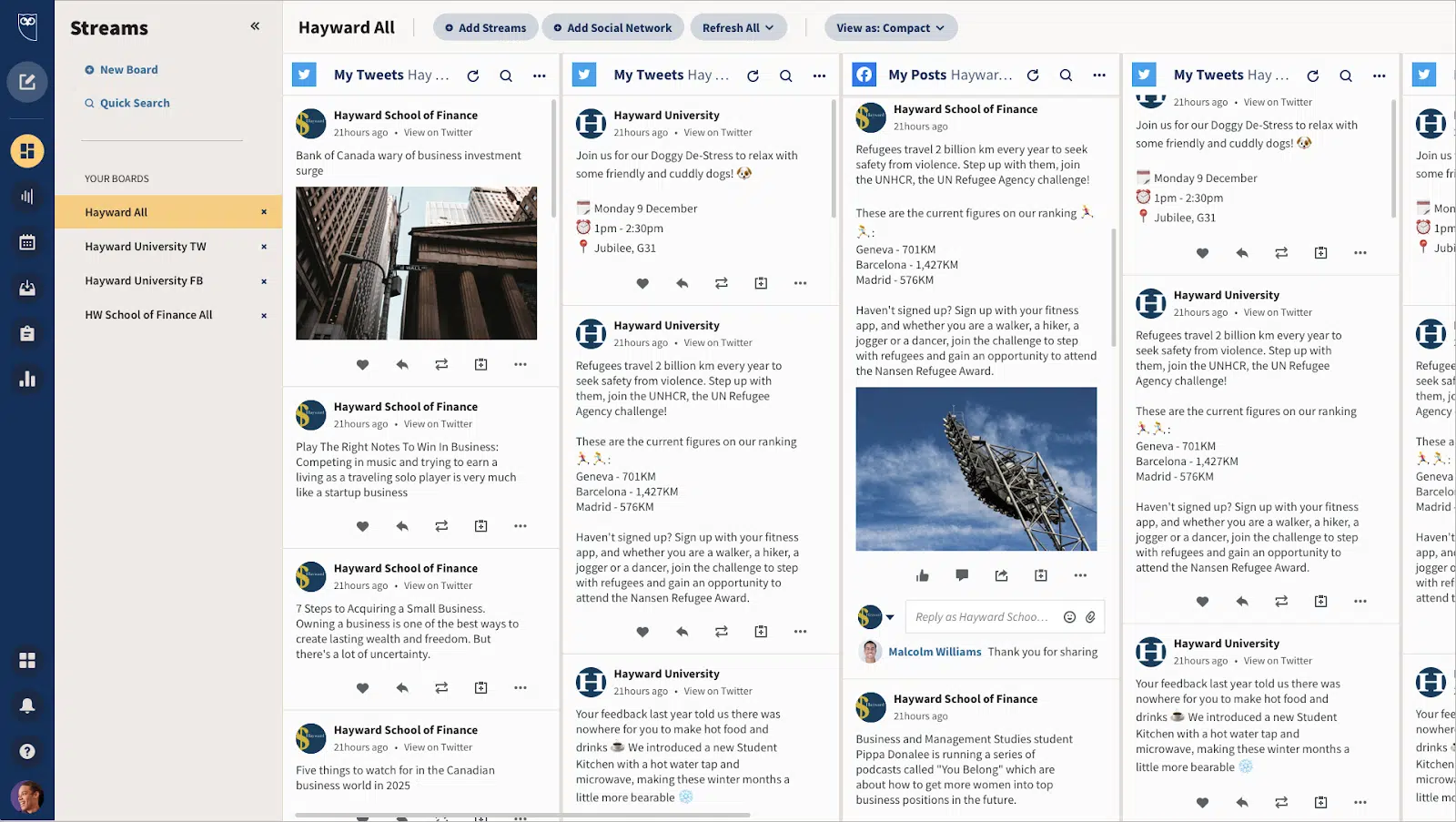
An in-depth evaluation of why digital marketing agencies, social media teams, and software resellers are moving beyond expensive legacy schedulers like Hootsuite to deploy BrandForge’s 100% white-labeled AI brand strategy, static web builder, and social co-pilot platform.
Table of Contents
⚡ Executive Summary
Hootsuite established an early market lead in social media management by allowing organizations to connect multiple social profiles into a single publishing dashboard. However, for digital marketing agencies, social media consultancies, and SaaS resellers seeking to scale client delivery and maximize recurring software margins, Hootsuite presents severe operational ceilings.
The Legacy Scheduler Bottleneck: Hootsuite is a point solution for social scheduling. It charges aggressive per-seat and per-profile monthly fees (often $99 to $249+/month per user), lacks an agency client portal hosted under custom domains, and offers zero tools to build brand positioning DNA, generate vector logos, compile static websites, or fulfill branded physical merchandise.
The BrandForge Advantage: BrandForge connects social media execution directly to the client’s underlying visual and strategic foundation. By leveraging BrandForge’s automated Social Media Co-Pilot alongside our full brand creation suite, agencies provide clients with an end-to-end Brand Operating System under their custom domain—capturing high-margin monthly SaaS retainers while automating visual and written delivery.
1. The Legacy Scheduler Trap: Why Hootsuite Limits Agency Growth in 2026
In the early days of social media marketing, simply queuing up posts across Twitter, Facebook, and LinkedIn was considered a premium agency service. In 2026, basic post scheduling has become completely commoditized. Clients no longer want to pay high agency retainers just for someone to push captions into a calendar grid—they demand a cohesive visual identity, an automated content stream, a matching high-speed website, and physical brand touchpoints.
Agencies reselling social media management using legacy schedulers like Hootsuite encounter four major friction points:
- Aggressive Per-User & Per-Profile Pricing: Hootsuite’s pricing structure heavily taxes agency growth. As you onboard more client social profiles and hire account managers, software subscription tiers scale rapidly, consuming your retainer profitability.
- No True White-Label Client Portal: You cannot offer Hootsuite as your agency’s proprietary software portal. When clients log in or view reports, they interact directly with Hootsuite’s branding, billing prompts, and support ecosystem.
- Disconnected Visual & Strategic Assets: Hootsuite assumes your client already has a complete library of brand guidelines, vector logos, and social post banners. Agency staff must spend hours manually designing graphics in external software before uploading them into Hootsuite’s queue.
- Zero Web & Merchandise Integration: Social media driving traffic to a slow, outdated website leads to lost ad spend and poor conversion rates. Hootsuite offers no website builder or physical print fulfillment tools to bridge the gap between social engagement and commercial conversion.
Agencies, social media firms, and reseller partners evaluating a comprehensive Hootsuite alternative are upgrading to BrandForge to transform manual scheduling services into an automated, full-stack brand operating system.
2. Architectural Deep Dive: Manual Social Schedulers vs. Programmatic Brand OS
The core technical divide between Hootsuite and BrandForge centers on manual content queueing versus programmatic brand-driven generation.
Hootsuite functions as a distribution pipe. An account manager using Hootsuite must manually write post captions, commission a designer to create visual image assets, upload the media, set publication dates, and repeat this process for every client profile across every channel.
BrandForge operates as an integrated Brand Operating System (OS). When an account is configured inside BrandForge, our system establishes a master digital DNA model containing positioning copy, target buyer psychographics, typography rules, color tokens, and vector logo files. When executing social campaigns, our Social Media Co-Pilot doesn’t just queue posts—it automatically drafts channel-specific copy, styles brand-compliant visual graphics, and queues publications based on the established brand rules, eliminating hours of manual creative overhead.
| Evaluation Criteria | Hootsuite Platform | BrandForge Platform |
|---|---|---|
| Business & Distribution Model | Direct B2C/B2B Retail SaaS | 100% White-Label B2B Reseller Engine |
| Custom Domain Client Portal | ❌ Hootsuite Retail Interface Only | ✅ Custom Domain Workspace & REST API |
| AI Brand Strategy DNA Engine | ❌ None (Manual caption drafting) | ✅ Automated Archetype, Audience & Voice OS |
| Vector Logo Export (SVG/PDF) | ❌ Not Supported | ✅ Production-Ready AI Vector Suite |
| Static Website & CDN Publishing | ❌ Not Supported | ✅ Pre-compiled Static Edge CDN Engine |
| Social Media Co-Pilot & Automation | ⚠️ Manual Calendar Queueing | ✅ Multi-Channel AI Copy, Graphic & Schedule Engine |
| Web2Print Physical Merchandise | ❌ Not Supported | ✅ Native API Print Logistics with Custom Markup |
3. Five Reasons Agencies Choose BrandForge Over Hootsuite
Pillar 1: Complete White-Label Custom Domain Workspaces
When you invite clients to view social analytics or review post queues inside Hootsuite, they interact with Hootsuite’s branding, receive Hootsuite system emails, and see Hootsuite upgrade notifications. This constantly reminds clients that you are simply marking up third-party software.
BrandForge delivers complete portal isolation. You can deploy our client workspace directly under your custom agency domain (e.g., portal.youragency.com), apply your visual branding, and grant clients self-service access. You can review specialized reseller program features on our Agency Partner Program Page to see how white-label workspaces position your agency as an enterprise technology partner.
Pillar 2: Native AI Social Media Co-Pilot Tied to Brand DNA
In Hootsuite, generating social content requires manual writing or basic AI prompts that lack deep context regarding the client’s competitive positioning, buyer personas, or strict tone guardrails.
BrandForge resolves social content creation through upstream strategy. Onboarding starts with our AI Brand DNA Engine. Once established, our Social Media Co-Pilot reads these rules to automatically craft multi-channel posts, style matching graphic banners, and schedule content across LinkedIn, Instagram, Facebook, and X on auto-pilot.
Pillar 3: Native Vector Logo Suite & Style Guide Exports
Hootsuite offers no visual design tools, requiring agencies to maintain separate subscriptions for design software like Adobe Creative Cloud or Canva.
BrandForge includes a built-in AI Vector Logo Generator. It produces production-ready SVG, EPS, and PNG logomarks alongside favicons, social avatars, and PDF style guides that clients can access directly inside your white-labeled portal.
Pillar 4: Integrated Static Website Generation & Edge CDN Hosting
Hootsuite focuses strictly on social feeds, leaving your agency to build, host, and manage client websites on separate platforms.
BrandForge connects social campaigns directly to web publishing. By leveraging BrandForge’s AI Static Website Builder, generated copy and visual assets compile into lightweight static HTML/CSS web pages deployed to global edge CDN servers, ensuring instant load times and perfect 100/100 Core Web Vitals scores.
Pillar 5: Web2Print Physical Merchandise Fulfillment
Social schedulers miss an entire physical revenue stream. Business clients constantly need physical marketing assets—such as business cards, stationery, employee apparel, and event banners—that reflect their digital branding.
BrandForge bridges digital design and physical manufacturing through our Web2Print Fulfillment Studio. Client vector logos automatically render onto physical product mockups inside your client dashboard. Clients can order business cards and promotional merch directly from your portal, generating automated physical product revenue for your agency on every order.
4. Financial Unit Economics: High Per-Seat Scheduler Fees vs. Wholesale SaaS Margins
Comparing the financial mechanics of paying per-seat retail fees for Hootsuite versus white-labeling BrandForge as a software reseller reveals a stark contrast in agency profit retention. The comparison below illustrates unit economics for an agency managing 30 active business client accounts:
Financial Comparison: Monthly Agency Profit Across 30 Active Clients
Hootsuite Agency Reseller Model
- Average Social Retainer Billing: $350/mo per client
- Hootsuite Enterprise Plan (5 Team Seats): -$249/mo base
- External Design & Web Builder Costs: -$80/mo per client
- Manual Designer & Copywriter Labor: -$140 labor per client
- Agency Net Revenue: ~$122/mo per client ($3,660/mo total)
BrandForge White-Label SaaS Model
- Branded Brand OS Platform Billing: $397/mo per client
- BrandForge Wholesale Workspace Fee: -$35/mo fixed
- Static Web Hosting & Vector Suite: $0 extra
- Web2Print Physical Merch Orders (25% Markup): +$85/mo per client
- Agency Net Revenue: ~$447/mo per client ($13,410/mo total)
By consulting our detailed guide to White-Label Reseller Pricing Models, agency leaders can evaluate how predictable wholesale software rates unlock over 80% gross profit margins while offering clients a complete digital and physical brand workspace.
5. Step-by-Step Setup Guide for Agency Resellers
Deploying your own white-labeled Brand OS with BrandForge requires no developer overhead. Follow this four-step setup process:
Step 1: Custom Portal Domain Configuration
Point your custom domain (e.g., portal.youragency.com) to BrandForge. Upload your agency logo, select primary visual accent colors, and configure automated welcome communications.
Step 2: Define Service Packages & Retail Markup
Select which modules (Brand DNA, AI Vector Logos, Static Website Builder, Social Media Co-Pilot, or Web2Print Merch) to include in your package tiers and set your monthly retail rates.
Step 3: Execute AI Brand DNA Generation
Input a brief description of your client’s business offer. BrandForge’s engine constructs their Brand DNA, vector logos, static CDN website, social calendar, and print merchandise templates in under two minutes.
Step 4: Grant Client Portal Access
Send your client login credentials to access their white-labeled workspace. Clients can manage visual assets, update their static website, execute social campaigns, and order physical merchandise directly through your portal.
Ready to Upgrade from Legacy Schedulers to a Complete Brand OS?
Stop settling for isolated social media scheduling tools. Join top digital agencies, social marketing teams, and resellers building scalable recurring SaaS revenue with BrandForge.
Explore specialized agency solutions by visiting BrandForge for Agencies, checking wholesale Partner Pricing Plans, or booking a platform walk-through with our team on our Live Demo Booking Page.
Frequently Asked Questions
What does “white-label” actually mean in social media management, and where do most tools fall short?
True white-label means three things stacked together: your custom domain on the client-facing app, your logo and colors throughout the UI, and your name on every system email, invoice, and notification the client receives. Most tools sold as “white-label” only deliver the first two. The client still gets password reset emails from [email protected], sees the vendor’s name in the browser tab title, or hits a vendor-branded billing page the moment they try to upgrade. If any surface the client touches leaks the underlying vendor, it isn’t white-label. It’s a reskin.
Can I actually white-label Hootsuite, Sprout Social, or Buffer?
Not in the way agencies mean when they say white-label. Hootsuite offers agency plans with some report branding, but the app itself, the login page, the mobile experience, the support flow, and the billing all remain Hootsuite. Sprout Social allows branded PDF reports. Buffer offers almost nothing beyond a logo on exports. None of them let you serve the entire product under portal.youragency.com with your own SMTP, your own billing rails, and your own support inbox. If a client asks “what platform is this,” the answer has to be your agency name, not “well, technically it runs on X.”
What’s the difference between a reseller model and an agency plan?
An agency plan is a volume discount on retail seats. You pay the vendor, the vendor bills you per seat or per social profile, and your margin is the delta between what you pay and what you charge the client. A reseller model is wholesale: you pay a flat platform fee, you set your own retail price with no ceiling, you own the billing relationship, and the vendor is invisible to the end client. Agency plans cap your margin at whatever the vendor decides is reasonable. Reseller models let you price on the value you create, not the vendor’s cost sheet.
How do social profile limits kill agency economics?
Every legacy scheduler charges per connected social profile. A single client with Facebook, Instagram, LinkedIn company page, LinkedIn personal, X, TikTok, YouTube, and Pinterest is eight profiles. At $10 to $25 per profile depending on plan, that’s $80 to $200 in software cost per client before you’ve paid a single staffer. Scale that to 30 clients and your software line item is $2,400 to $6,000 a month. Reseller models that price per workspace or per client account, regardless of how many profiles are connected, let you serve heavy multi-channel clients without watching margin evaporate.
What happens to my agency if the vendor decides to sell direct to my clients?
This is the quiet risk nobody talks about. When your clients log into a vendor-branded portal, receive vendor emails, and see vendor upgrade prompts, the vendor has a direct line to your book of business. Nothing stops them from launching a self-serve tier next quarter and pointing marketing at the customers you acquired. True white-label with custom domains and your own billing means the vendor never knows who your clients are. That’s not paranoia, it’s how you protect an asset you spent years building.
Can clients tell when I’m using white-labeled software instead of building my own?
If the white-label is done properly, no. The signals clients pick up on are: mismatched domains between your marketing site and the login portal, generic system emails that don’t match your voice, support responses signed by someone they’ve never met, and billing pages that suddenly look like a different company. Fix those four surfaces and the product feels indistinguishable from proprietary software. Most agencies fail on emails and billing because vendors rarely let you customize SMTP or run charges through your own Stripe account.
How do I handle client support when the software isn’t mine?
Two models work. First tier support sits with your account managers who handle the vast majority of “how do I schedule a post” questions using vendor-supplied documentation you’ve rebranded. Second tier escalates to the vendor through a partner channel that the client never sees. The failure mode is agencies who forward client emails directly to vendor support, which immediately breaks the white-label illusion. Set expectations internally that no client-facing communication ever mentions the underlying platform.
What should I actually own versus what should the vendor own in a white-label stack?
You own: the client relationship, the domain, the billing, the pricing, the packaging, the positioning, the support inbox, the sales cycle. The vendor owns: infrastructure, uptime, feature roadmap, security patching, API integrations with social networks, and platform-level compliance. If a vendor tries to control your pricing, your client communications, or your positioning, that’s a partnership problem, not a white-label problem.
How do I price white-labeled social media management for margin?
Anchor on outcome, not seats. A client paying $400 a month for “social media management” is buying a result: consistent posting, on-brand creative, and measurable engagement. Whether it takes you two social profiles or ten to deliver that result is your operational concern, not theirs. Package by client size or output volume, not by underlying tool consumption. This is where per-profile pricing from legacy tools breaks your model: it forces you to think in vendor units when clients buy in business outcomes.
What breaks when I switch from Hootsuite to a white-label platform mid-client?
Post history and scheduled queue continuity. Most tools don’t offer clean migration paths for existing scheduled content, so plan a two-week overlap where you finish out the Hootsuite queue while onboarding fresh content into the new platform. Analytics history is the harder loss: historical engagement data usually stays trapped in the old tool. Export what you can as CSV before cancelling and set client expectations that year-over-year comparisons will restart. The switch is worth it, but it isn’t invisible.
Does white-labeling social media alone actually differentiate my agency in 2026?
No, and this is the honest part. Social scheduling is commoditized. What differentiates is bundling: social execution tied to the brand identity that produced the visuals, the website that receives the traffic, and the physical touchpoints that close the loop offline. An agency offering a white-labeled Hootsuite clone is competing on price against every other agency doing the same. An agency offering a complete brand operating system under their domain is selling a category the client can’t get from three separate vendors. The white-label question stops being about social media the moment social media becomes one module in a larger stack.
What contract terms should I demand from any white-label vendor?
Data portability on exit, including client lists and content archives in standard formats. Pricing lock for at least 24 months so a vendor can’t squeeze margin after you’ve built distribution. No direct solicitation of your clients, ever, including after contract termination. Uptime SLA with actual credits, not just apologies. Right to audit security posture annually. And critically: written confirmation that the vendor’s brand appears nowhere in the client experience, with specific enumeration of every touchpoint including transactional emails, mobile push notifications, browser tab titles, and error pages.
Why do social media agencies seek a Hootsuite alternative in 2026?
Hootsuite is a standalone social media management tool. While it schedules posts across networks, it operates in an isolated silo: it cannot build underlying brand strategy DNA, generate scalable vector logos, compile pre-rendered static websites, or fulfill branded physical print merchandise. Furthermore, Hootsuite’s enterprise pricing tiers carry steep per-user and per-account costs with no custom-domain white-label portal for agency software reselling.
How does BrandForge’s Social Media Co-Pilot differ from Hootsuite?
Hootsuite requires managers to write post copy, upload images, and set publication calendars manually or through basic templates. BrandForge’s Social Media Co-Pilot reads directly from the client’s Brand DNA profile, automatically generating channel-specific captions, brand-aligned visual banners, and scheduled publication queues without manual graphic labor. Learn more on our Social Media Co-Pilot Feature Page.
Can I white-label BrandForge under my agency’s custom domain?
Yes. BrandForge is built specifically for wholesale B2B distribution. Agencies can rebrand the entire dashboard under their custom domain, setting their own retail monthly subscription rates for client access while retaining over 80% gross software margins. Review pricing models on our Reseller Models Page.


