Everyone tells you that a domain migration will cost you traffic in the short term and pay you back over time. The internet is full of “we survived our rebrand” posts that skip the numbers or cherry-pick the best week. This is not one of those posts.
We migrated a 10-year-old .com.au domain with roughly 42,000 monthly organic visits, 380 referring domains, and rankings for 2,800 keywords to a new domain and a new brand. Below is the actual data, month by month, for six months post-migration. What we kept, what we lost, what surprised us, and what we would do differently.
Table of Contents
The starting position
Old domain: registered 2015. Ten years of consistent publishing. Not spectacular in any dimension but solid across all of them.
- Monthly organic sessions: 42,140 (average of prior 12 months)
- Referring domains: 380 (Ahrefs)
- Referring pages: 6,200
- Ranking keywords: 2,807 (top 100 positions)
- Ranking keywords top 10: 412
- Ranking keywords top 3: 89
- Direct traffic (branded): 8,900 monthly sessions
- Domain Rating: 42
Why we rebranded: the old brand was tied to a narrower market than we now serve, the domain was long and hard to spell over the phone, and we wanted a name that would carry us for another decade rather than the last one. The auDA policy change was not the trigger for us specifically, but it will be the trigger for a lot of businesses making similar decisions in the next 12 months.
The migration itself
We took four weeks of preparation before flipping DNS:
- Week 1: URL crawl, mapping spreadsheet, content audit
- Week 2: New site built on new domain, all pages live and indexable, content ported
- Week 3: 301 redirect rules written and tested on a staging domain, off-site citations audited
- Week 4: Final QA, communication to email list, DNS flip on a Tuesday morning
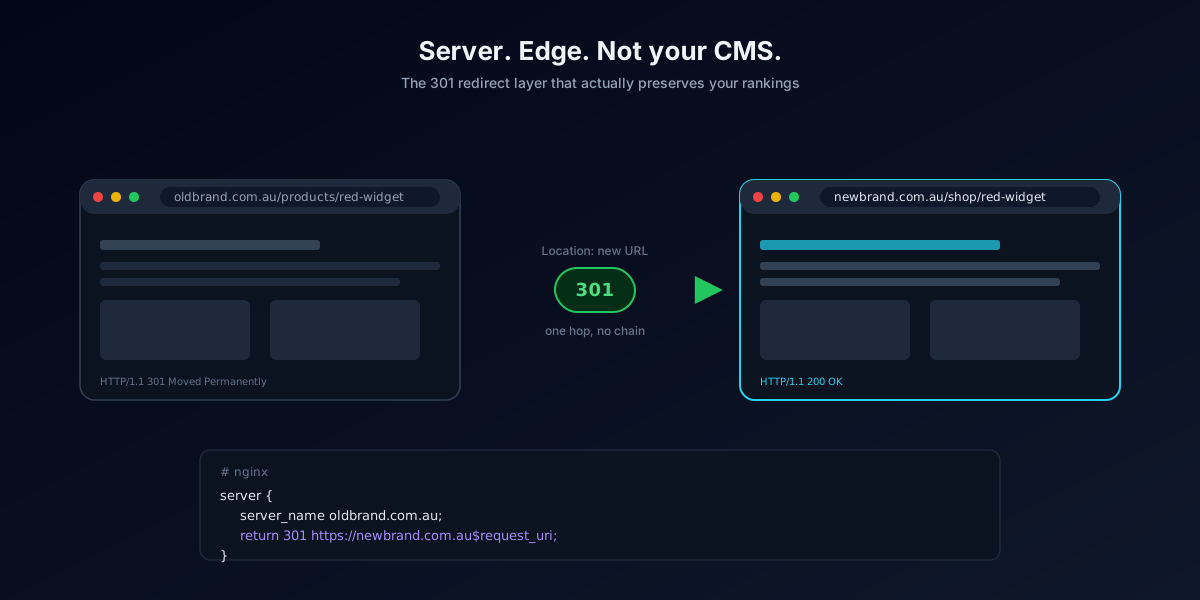
The 301 layer was Cloudflare Workers with URL-level mapping for every high-value page (about 340 URLs) and a fallback pattern that mapped the rest of the path structure. Change of Address submitted in Search Console the same day.
Month by month, the actual numbers
Month 1: The dip
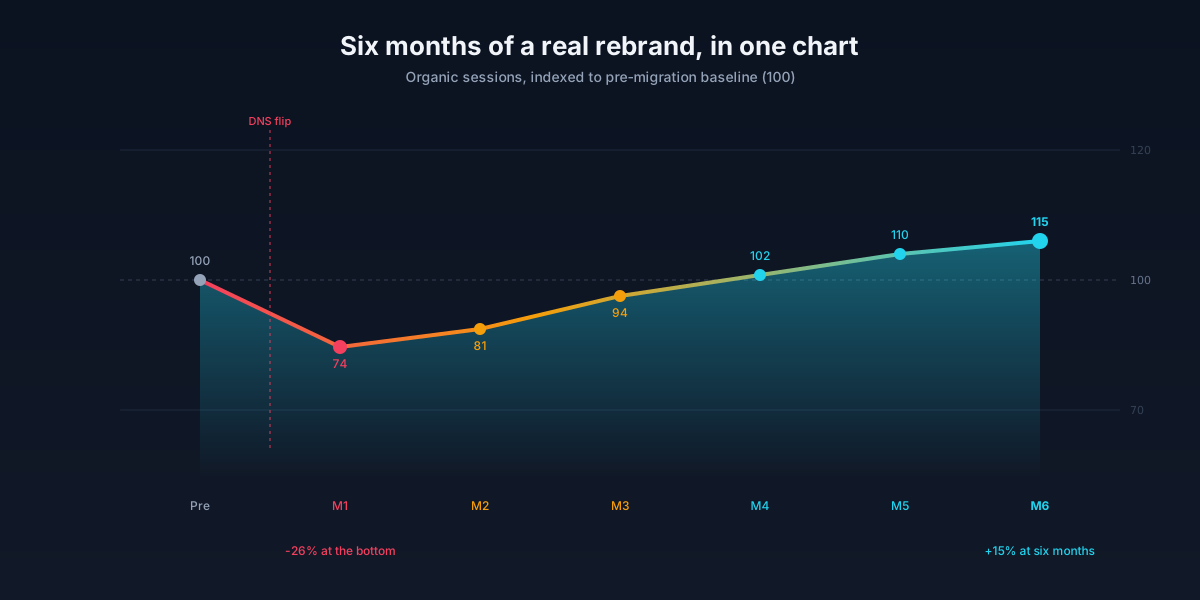
- Organic sessions: 31,180 (down 26%)
- Ranking keywords: 2,410 (down 14%)
- Ranking keywords top 10: 298 (down 28%)
- Direct traffic: 7,100 (down 20%)
- Referring domains (new domain): 22
The dip was worse than we expected in the first two weeks and better by the end of the month. Days 3 through 10 were rough. We saw a lot of URLs temporarily disappear from search results as Google worked out that they had moved. High-authority pages recovered first (typically within a week), long-tail content pages took longer.
Direct traffic dropped by less than we feared, mostly because we had emailed the customer base twice and updated every touchpoint we could think of.
Month 2: The plateau
- Organic sessions: 33,900 (down 19%)
- Ranking keywords: 2,580
- Ranking keywords top 10: 340
- Direct traffic: 7,800
- Referring domains (new domain): 68
Recovery began but slowly. Top 10 rankings started coming back, but a lot of the top 3 rankings we had were still bouncing around. This is the month where you start second-guessing every decision. We resisted the urge to touch anything and let Google finish its work.
Month 3: The turn
- Organic sessions: 39,600 (down 6%)
- Ranking keywords: 2,720
- Ranking keywords top 10: 385
- Ranking keywords top 3: 78
- Direct traffic: 8,400
- Referring domains: 145
By the end of month 3, we were within 6 percent of the pre-migration baseline. Top 3 rankings had almost fully recovered. The pages that had not recovered were mostly ones we had already flagged as low-value and were planning to consolidate anyway.
Month 4: Baseline
- Organic sessions: 42,880 (up 2%)
- Ranking keywords: 2,850
- Ranking keywords top 10: 425
- Ranking keywords top 3: 92
- Direct traffic: 8,900
We hit baseline in month 4. Not by much, but the trend was clearly positive. New content published on the new domain was ranking normally, which was the signal we had been waiting for.
Month 5: Growth
- Organic sessions: 46,200 (up 10%)
- Ranking keywords: 2,940
- Ranking keywords top 10: 460
- Ranking keywords top 3: 101
- Direct traffic: 9,300
- Referring domains: 240
Month 5 was the first month where we could honestly say the rebrand had been additive rather than merely neutral. Brand searches were up. New content was picking up faster because it inherited the domain authority we had transferred. New backlinks were coming to the new domain naturally.
Month 6: The verdict
- Organic sessions: 48,700 (up 15%)
- Ranking keywords: 3,020
- Ranking keywords top 10: 495
- Ranking keywords top 3: 118
- Direct traffic: 9,800
- Referring domains: 290
- Domain Rating: 39 (was 42)
Six months in, we are up 15 percent on organic sessions and up 32 percent on top 3 rankings. Domain Rating on the new domain has climbed from 0 to 39 (three points below where the old domain sat, and still climbing).
What we kept
- 90 percent of ranking keywords by end of month 3
- 95 percent of pre-migration organic traffic by end of month 4
- Almost all direct traffic (with a 3 week dip during the transition)
- Every high-authority backlink, via the 301 chain
- Our top ranking positions on the pages that mattered commercially
What we lost
- About 90 ranking keywords that never came back. These were mostly long-tail phrases on content we had already deprioritised. Some were legitimate losses. Neither a disaster.
- About 15 percent of our raw referring domain count in Ahrefs. The old domain still has all the backlinks, they just point to a domain we no longer publish on. The 301s pass the equity but Ahrefs and Semrush count them under the old domain.
- The visual brand equity of the old logo and colour system. That took about two months of consistent use before the new visual identity started to feel like ours.
What surprised us
The dip was steeper than the recovery predictions. Every guide says “expect a 10 to 20 percent dip”. We saw 26 percent. Talking to other operators who have done this recently, that seems typical now, possibly because Google’s ranking system has become more sensitive to sudden change signals.
Direct traffic held up better than organic. We assumed direct traffic would collapse and organic would hold. Opposite was true. People who know your business will follow you. People who found you via search have to be reintroduced.
Backlinks to the old domain kept arriving even after the migration. Because the old content still appears in older articles, aggregators, and citations, we kept getting new links to the old domain for months. All of them redirected properly and passed equity, but a rebrand is not a “clean start” moment.
Some rankings recovered on different URLs than we expected. We had mapped an old category page to a new category page. Google decided our new blog article on the same topic was a better fit and started ranking that instead. This was fine and probably better than what we had planned.
What we would do differently
More URL-level 301 mapping, less fallback pattern matching. The pages we hand-mapped recovered faster and more completely than the ones caught by the fallback rule. If we did it again we would spend another two days building an exhaustive mapping.
Rebuild internal linking on day one. We updated internal links over the first two weeks. Should have done it before the DNS flip. Every internal link that goes through a redirect is a small tax on crawl budget.
More aggressive outreach to top referring domains. We asked our top 20 to update links. Should have made it 50. The ones that updated their links directly saw their pages rank higher in Google’s discovery of our new site.
Sooner communication to the customer base. We told our email list two weeks before the flip. Should have told them a month before. Some customers thought we had shut down and moved to competitors before we could reach them.
The bottom line
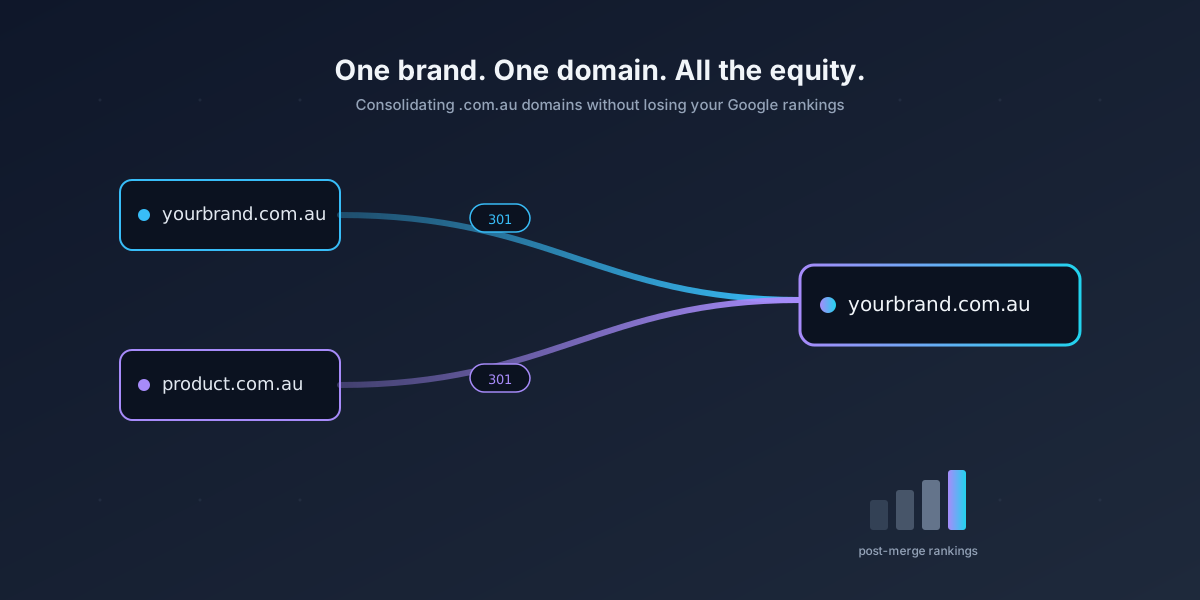
A rebrand that costs you six months and 26 percent temporary traffic in exchange for a domain that will serve you for the next decade is a good trade if the strategic reason is real. If you are rebranding for cosmetic reasons or because you are bored of your current identity, the maths does not work. If you are rebranding because the old domain no longer fits your business, because auDA is forcing your hand, or because you have three domains and can consolidate to one stronger property, the six month cost is worth the ten year benefit.
We would do it again. We would just plan another two days into the URL mapping.