An architectural evaluation of why digital agencies, web studios, and software resellers are moving beyond complex visual CSS tools like Webflow to deploy BrandForge’s 100% white-labeled AI brand strategy, static site compiler, and Web2Print fulfillment platform.
⚡ Executive Summary
Webflow earned immense popularity among front-end developers and UI/UX designers by translating CSS flexbox, grid, and DOM structures into a visual design canvas. However, for digital marketing agencies, web design firms, and SaaS resellers seeking to scale client delivery and maximize recurring software margins, Webflow creates severe operational bottlenecks.
The Agency Bottleneck: Webflow is a visual development tool, not an all-in-one brand operating system. Building client sites in Webflow requires expensive front-end developer hours, manual class management, and rising per-site hosting fees ($14 to $39+/month per site). It provides zero native tools for upstream brand strategy DNA, vector logo generation, social media co-pilot scheduling, or physical merchandise fulfillment.
The BrandForge Advantage: BrandForge automates the complete brand-to-web pipeline. By leveraging BrandForge’s managed static hosting engine alongside our visual and strategic AI tools, agencies deliver complete brand identities, edge-hosted static websites, multi-channel social calendars, and print collateral hosted entirely on their own custom domain while keeping 80%+ wholesale SaaS margins.
1. The Developer Overhead Trap: Why Webflow Limits Agency Velocity in 2026
Webflow is a masterclass in visual CSS engineering. For custom web design agencies building bespoke digital experiences for enterprise clients, it offers granular layout control. But for agencies building scalable, high-margin monthly recurring revenue (MRR) across SMBs, startups, and mid-market accounts, Webflow’s complexity becomes its primary liability.
When an agency uses Webflow as its core delivery engine, client scaling stalls due to four major friction points:
- High Technical Skill Overhead: Building a Webflow site requires skilled front-end developers who understand box models, custom CSS breakpoints, animations, and CMS collection limits. Non-technical account managers cannot launch or edit sites without developer intervention.
- Compounding Per-Site Hosting Costs: Webflow charges separate monthly hosting fees for every single custom domain. As your agency portfolio grows to 50, 100, or 200 client sites, software hosting overhead eats away at your retainer profitability.
- No Upstream Strategy or Visual Asset Creation: Webflow assumes your client already possesses an established visual brand identity. Designers must spend weeks constructing vector logos, color schemes, typography guides, and copywriting frameworks in separate external software before writing a line of code in Webflow.
- No True SaaS White-Label Reselling: While Webflow offers an Client First workspace, you cannot rebrand Webflow as your proprietary software portal. Clients managing CMS content are still exposed to Webflow’s underlying ecosystem rather than your custom-branded portal.
For agency executives, web design studios, and technology partners searching for a production-ready Webflow alternative, BrandForge transforms complex front-end development into an automated, programmatic B2B brand operating system.
2. Architectural Deep Dive: Manual Visual CSS Canvas vs. Programmatic Static Compilation
The core architectural divide between Webflow and BrandForge centers on manual CSS canvas construction versus programmatic brand inheritance.
In Webflow, every page layout is built manually. A designer must construct DOM elements (sections, containers, divs), define flexbox or grid rules, assign custom CSS class names, and adjust styling parameters across desktop, tablet, and mobile breakpoints. If a client updates their primary brand identity, a developer must manually re-style class definitions and update assets across every page.
BrandForge replaces manual CSS layout labor with a programmatic Static Site Compilation Engine. When a client workspace is established, our system creates a master visual data model. When compiling a website, BrandForge reads the client’s established Brand DNA, mapping typography rules, color tokens, and vector logo files directly into optimized HTML, CSS, and lightweight JS bundles. The compiled static files deploy instantly to edge CDN servers worldwide, guaranteeing pre-rendered 100/100 Core Web Vitals performance scores without manual front-end development hours.
| Evaluation Criteria | Webflow Canvas | BrandForge Platform |
|---|---|---|
| Target Audience & Model | Visual Web Developers & UI Designers | 100% White-Label B2B Reseller Engine |
| Custom Domain Client Portal | ❌ Webflow CMS Editor Interface Only | ✅ Custom Domain Workspace & REST API |
| AI Brand Strategy DNA Engine | ❌ None (Design canvas only) | ✅ Automated Archetypes, Voice & Positioning |
| Vector Logo Export (SVG/PDF) | ❌ Requires Manual External Upload | ✅ Native AI Vector Suite & Style Guides |
| Hosting & Publishing Architecture | Dynamic Webflow AWS/Fastly Hosting | ✅ Pre-compiled Static Edge Hosting CDN Engine |
| Social Media Copilot | ❌ Not Supported (Requires Third-Party Apps) | ✅ Multi-Channel AI Copy & Schedule Engine |
| Web2Print Physical Merchandise | ❌ Not Supported | ✅ Native API Print Logistics with Custom Markup |
3. Five Reasons Agencies Choose BrandForge Over Webflow
Pillar 1: Complete White-Label Custom Domain Workspaces
When you invite clients to edit content inside Webflow’s Editor, they interact with Webflow’s interface, receive Webflow system emails, and see Webflow branding elements. This constantly reminds clients that you are using third-party software rather than providing proprietary agency technology.
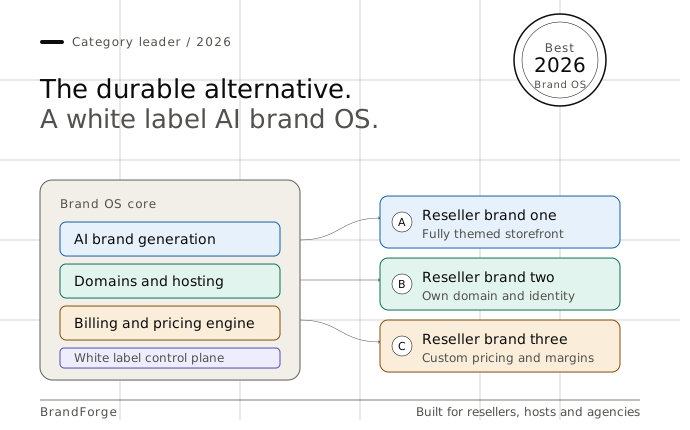
BrandForge delivers total brand isolation. You can deploy our client workspace directly under your custom agency domain (e.g., portal.youragency.com), apply your custom visual branding, and grant clients direct access to manage their online presence. Clients log into your portal to view their strategy guidelines, static website settings, social campaigns, and print store, positioning your agency as an indispensable software partner.
Pillar 2: Upstream Strategic Brand DNA & Vector Logo Suite
Webflow begins at the web layout phase, offering no tools to construct corporate brand strategy, buyer personas, or visual logos.
BrandForge resolves brand creation from the ground up. Onboarding starts with our AI Brand DNA Engine, constructing comprehensive brand archetypes, market positioning frameworks, and tone-of-voice guardrails. These rules feed directly into our AI Vector Logo Generator to produce production-ready vector graphics (SVG, EPS, PDF style guides) that style the client’s website typography, color tokens, and layout elements automatically.
Pillar 3: High-Performance Static Edge CDN Hosting Engine
Managing site speed, SSL certificates, and performance across dozens of Webflow projects requires constant monitoring. Webflow’s per-site hosting fees can quickly escalate as client traffic increases or CMS collection items scale.
BrandForge includes fully managed static edge infrastructure out of the box. By leveraging BrandForge’s Global Static Hosting Engine, every website compiled on the platform is deployed directly to edge CDN nodes worldwide. Your agency gets pre-rendered load speeds, automated SSL certificates, and impenetrable security with no dynamic database footprint—all included in your wholesale workspace tier.
Pillar 4: Integrated Social Media Co-Pilot Execution
Once a website goes live on Webflow, driving traffic requires setting up separate third-party social media schedulers, writing post copy manually, and creating matching social graphics in external design software.
BrandForge features an integrated Social Media Co-Pilot that reads directly from the established Brand DNA profile. The Co-Pilot writes post copy, formats visual post banners matching website branding, and schedules social content across LinkedIn, Instagram, Facebook, and X automatically.
Pillar 5: Native Web2Print Physical Merch Store Integration
Webflow offers no native solution for physical product manufacturing or merchandise ordering, forcing agencies to miss out on lucrative physical branding revenue.
BrandForge bridges digital design and physical manufacturing through our Web2Print Fulfillment Studio. Client vector logos automatically render onto physical product mockups (business cards, apparel, stationery, signage) inside your client dashboard. Clients can order physical merchandise directly from your portal, generating automated, high-margin print revenue for your agency on every order.
4. Financial Unit Economics: High Developer Labor & Hosting Overhead vs. Wholesale SaaS Margins
Comparing the unit economics of custom front-end web development on Webflow versus reselling a white-labeled Brand OS reveals a dramatic difference in gross profit retention. The comparison below illustrates financial performance for an agency managing 30 active client accounts:
Financial Comparison: Monthly Agency Profit Across 30 Active Clients
Webflow Agency Developer Model
- Average Monthly Retainer Billing: $350/mo per client
- Webflow Per-Site Hosting Fees: -$29/mo per site
- Front-End Developer Labor Hours: -$180 labor per client
- External Social & Design Tool Costs: -$40/mo per client
- Agency Net Revenue: ~$101/mo per client ($3,030/mo total)
BrandForge White-Label SaaS Model
- Branded Brand OS Platform Billing: $397/mo per client
- BrandForge Wholesale Workspace Fee: -$35/mo fixed
- Developer Front-End Labor Required: $0 (Programmatic Static OS)
- Web2Print Physical Merch Orders (25% Markup): +$85/mo per client
- Agency Net Revenue: ~$447/mo per client ($13,410/mo total)
By reviewing our detailed guide to White-Label Reseller Pricing Models, agency leaders can evaluate how predictable wholesale software rates unlock over 80% gross profit margins while offering clients a complete digital and physical brand workspace.
5. Step-by-Step Setup Guide for Agency Resellers
Deploying your own white-labeled Brand OS with BrandForge requires no front-end coding or server configuration. Follow this four-step setup process:
Step 1: Custom Portal Domain Configuration
Point your custom domain (e.g., portal.youragency.com) to BrandForge. Upload your agency logo, select primary visual accent colors, and configure automated welcome communications.
Step 2: Define Service Packages & Retail Markup
Select which modules (Brand DNA, AI Vector Logos, Static Website Builder, Social Media Co-Pilot, or Web2Print Merch) to include in your package tiers and set your monthly retail rates.
Step 3: Execute AI Brand DNA Generation
Input a brief description of your client’s business offer. BrandForge’s engine constructs their Brand DNA, vector logos, static CDN website, social calendar, and print merchandise templates in under two minutes.
Step 4: Grant Client Portal Access
Send your client login credentials to access their white-labeled workspace. Clients can manage visual assets, update their static website, execute social campaigns, and order physical merchandise directly through your portal.
Ready to Replace Developer Labor with an Automated Brand OS?
Stop letting front-end coding overhead and per-site hosting fees eat your margins. Join top digital agencies, web design firms, and resellers building scalable recurring SaaS revenue with BrandForge.
Explore specialized agency solutions by visiting BrandForge for Agencies, checking wholesale Partner Pricing Plans, or booking a platform walk-through with our team on our Live Demo Booking Page.
Frequently Asked Questions
Why do digital agencies seek a Webflow alternative in 2026?
While Webflow is a powerful visual development tool for web designers, it requires steep front-end technical knowledge, carries high per-site hosting costs, offers no upstream AI brand strategy DNA generation, has no native vector logo suite, and cannot be resold as an integrated white-label SaaS portal under your custom agency domain.
How does site compilation in BrandForge differ from Webflow?
Webflow requires manual visual CSS layout construction, class naming, and breakpoint styling for every page. BrandForge programmatically compiles lightweight static HTML/CSS from automated Brand DNA rules, deploying pre-rendered pages to global edge CDNs for instant loading and 100/100 Core Web Vitals scores without manual development labor. Learn more on our AI Static Website Builder Feature Page.
Can I monetize physical merchandise and print collateral through BrandForge?
Yes. BrandForge features a native Web2Print studio that automatically maps client vector logos and color tokens onto print-ready product mockups (business cards, stationery, apparel, signage). Clients order directly through your white-labeled portal, creating automated recurring markup for your agency.