Every serious partner conversation eventually lands on the same list of questions. Not the marketing questions. The real ones. The ones a hosting company, registrar, or agency asks when they’re about to bet part of their product roadmap on someone else’s platform.
So instead of another feature page, here are the answers. Direct, in the order people actually ask them.
Table of Contents
1. How good is the site editor?
World class. And I don’t say that lightly.
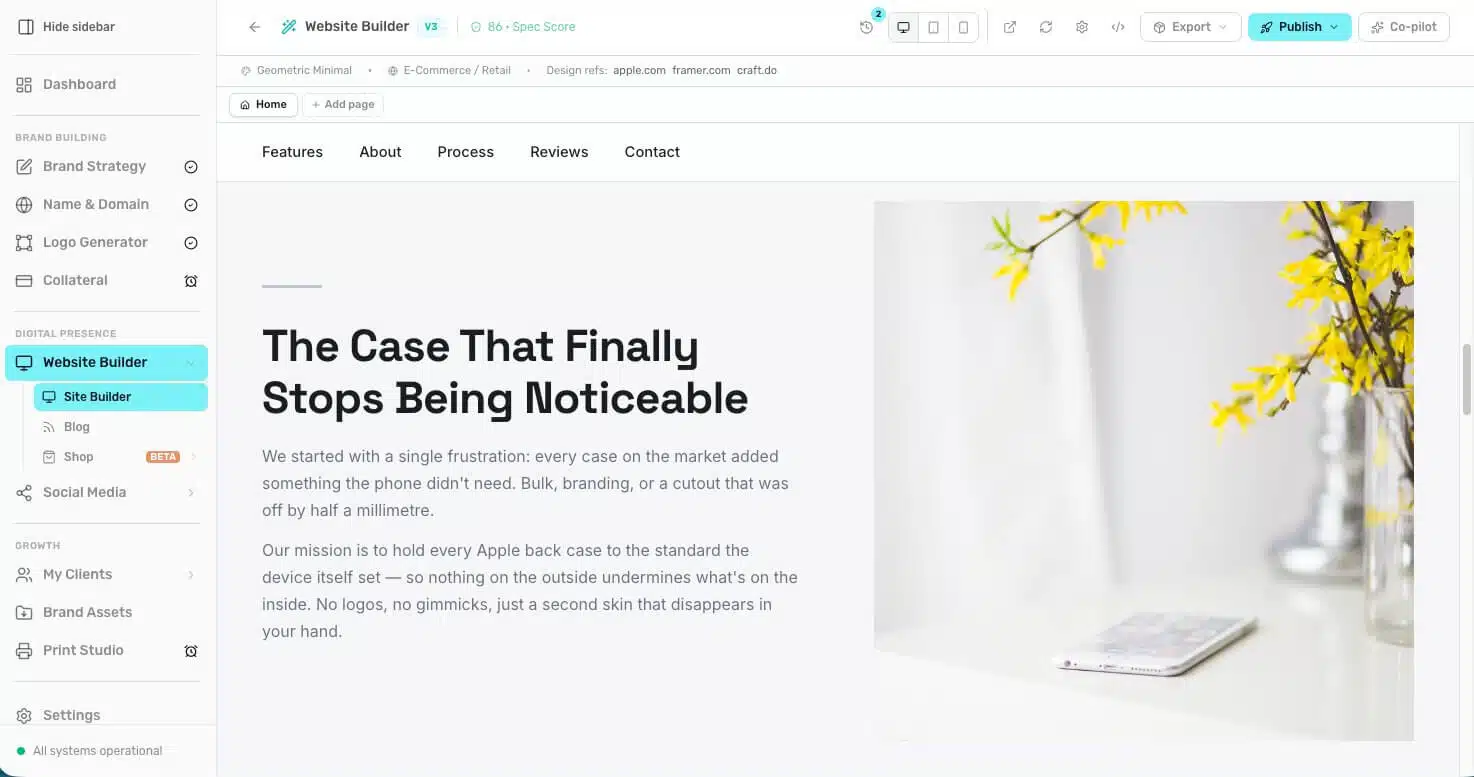
The team behind the editor has spent years building for some of the biggest hosting brands and site builders in Europe. That experience shows in the details you only notice when you use it every day: the block model, the responsiveness, the way saving and previewing behave, how the editor handles content the AI generates versus content the user drops in themselves.
We didn’t ship a wrapper around an open source editor and call it a day. We built the editing experience we wanted to use ourselves after twenty years of watching every other builder frustrate our customers.
2. Can customers export or migrate their sites?
Yes. Both directions.
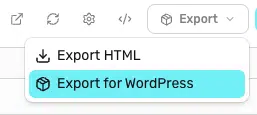
Export. End customers can export their site as clean HTML, or as an editable WordPress template. That last part matters. It’s not a static dump. It’s a real WordPress theme your customer or their agency can keep editing after they leave.
We do this on purpose. A platform that traps customers is a platform partners can’t sell with a straight face. If someone wants to go, we make it easy. In practice, almost nobody does, because the platform keeps giving them a reason to stay.
Migration in. The onboarding is embarrassingly simple. Paste an old URL. That’s it. The site builder pulls the existing site, and the AI rebuilds it from scratch against the brand DNA it has generated for that business.
One warning. Shit in is shit out. But not from us. If the old site was a mess of stock photography and copy someone wrote at 2am in 2019, we don’t just port the mess over. The AI rewrites and reuses the good parts, throws out what doesn’t work, and delivers something that looks like a ten thousand euro website. On brand. Fresh design. Best practices baked in.
3. Can you host sites on the customer’s domain?
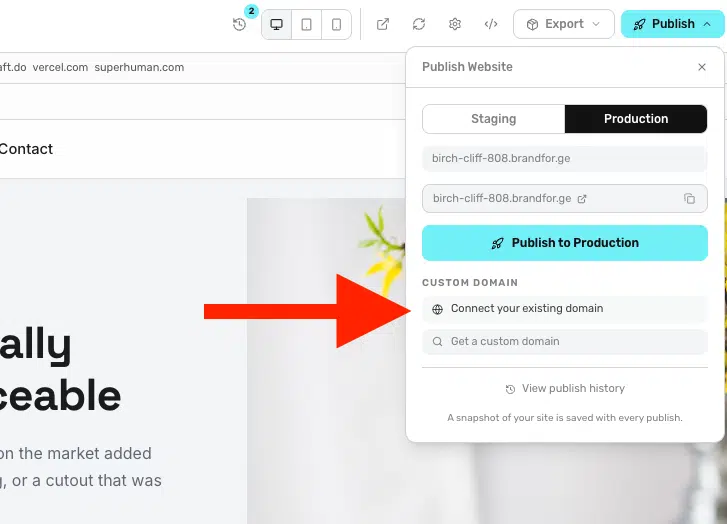
Yes. Full custom domain hosting is part of the platform. Customers point their domain, or you provision it through the connected registrar flow, and the site runs on their name. No brandforge.com in the URL, no shared subdomain, no compromise.
If you also want to export and host it on your own infrastructure as a WordPress site, that path is open too. See question 2.
4. How much control do you have over templates?
Total control, without forcing anyone to become a developer to get it.
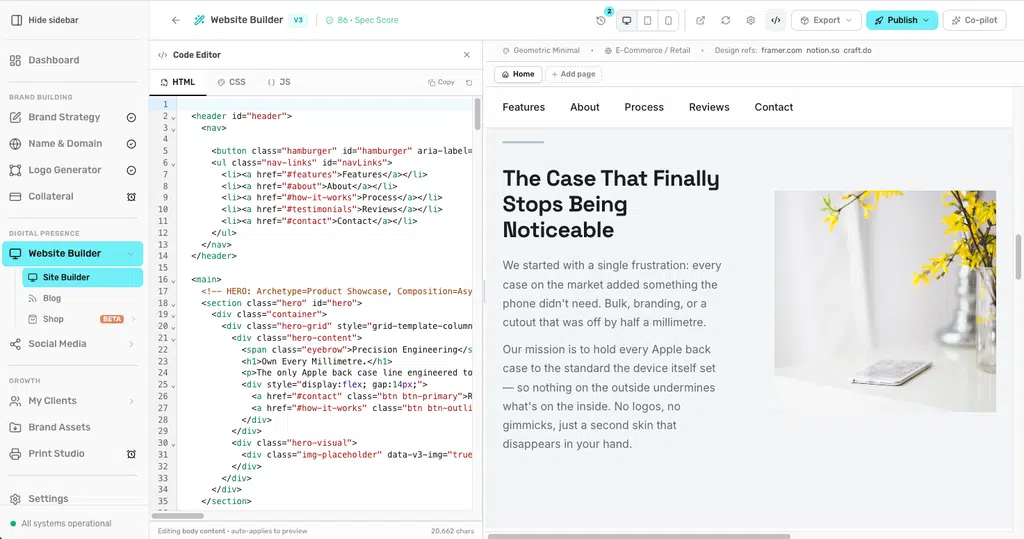
The website editor gives you full control over every change. Layout, structure, content, styling, all of it. If you want to go deeper, you can edit the HTML directly. Nothing is hidden behind a paywall or a “contact us for source access” wall.
At the same time, we built the editor so a small business owner with zero technical background can still use it confidently. The advanced control is there when you want it. It stays out of your way when you don’t.
5. Can you create your own plans and features?
Yes. Everything about the packaging is flexible.
You define the plans. You decide what’s in them, what the price points are, what the upgrade path looks like, whether you sell monthly or annually, in which currencies, with which trial or freemium mechanics. The pricing matrix supports six billing cycles across five currencies out of the box, and the plan builder lets you slice features however your market wants to buy them.
This is the whole point of a channel-first platform. If we forced every partner into the same three plans, we’d be a bad wholesaler. So we don’t.
6. How mature is the ecommerce system?
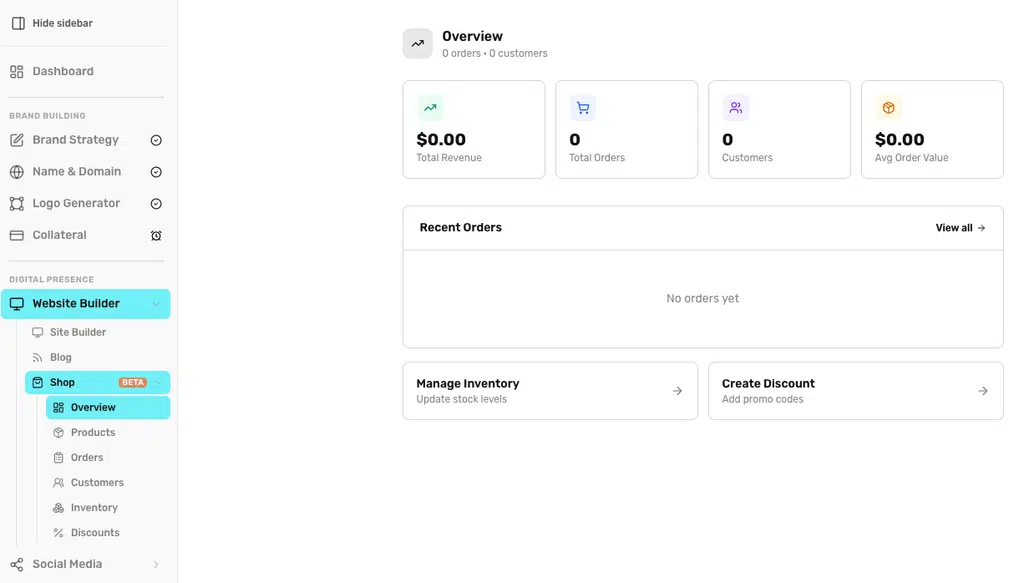
Operational and production ready. The experience is more or less what you’d expect from Shopify. Product catalog, checkout, orders, the pieces that need to be there are there and working.
It’s not a toy bolted onto a site builder. It’s a real store engine that partners can put in front of real customers today.
7. What happens if a customer cancels?
Depends on the contract you sold them, and that’s the honest answer.
Most partners run monthly cancellation as the default. Customer cancels, the site stops renewing at the end of the current period, and depending on your policy you either freeze the site, offer a grace period, or let the customer export first. All of that is configurable on your side.
For partners selling annual or multi-year contracts, the cancellation flow follows whatever terms you’ve written. The platform doesn’t force a specific model on you. It gives you the levers to enforce yours.
The one thing we insist on: the customer’s data and their site are theirs. If they cancel, they can still export. That’s a hard line, and it’s part of why partners can sell BrandForge without the pit-in-the-stomach feeling of locking someone in.
8. What are the wholesale costs at 100, 1,000, and 10,000 customers?
Custom, and deliberately so.
Wholesale economics at 100 customers, 1,000 customers, and 10,000 customers are three very different conversations. Volume commitments, domain economics, currency, billing cycle, and the mix of plans you’re selling all move the number. Rather than publish a table that would be wrong for most partners, we quote each partner directly.
Contact us and we’ll work out pricing that fits the shape of your business.
9. Is the API sufficiently open for custom WHMCS automation?
Yes. This is one of the questions I get most often from hosting partners, and the answer is the one you want.
The API is open enough to drive full WHMCS automation. Provisioning, suspension, unsuspension, termination, upgrades, downgrades, domain association, user management. Everything a WHMCS module needs to talk to, we expose.
And it’s not just WHMCS. If you run a custom stack, if you’ve built your own control panel, if you’re plugging BrandForge into an internal ordering system or a partner portal you built yourself, the same API supports all of it. We designed it to be integrated, not just consumed.
Partners who’ve been through this exercise usually have a working provisioning flow inside a few days, not weeks.
Why we answer this way
There are two kinds of platform vendors. The kind that answers due-diligence questions with brochures, and the kind that answers them straight.
We’re the second kind, because our business only works if yours does. Channel-first isn’t a marketing label at BrandForge. It’s the entire commercial model. If the platform doesn’t hold up under the scrutiny of a real hosting company’s technical team, we don’t have a business.
So if you have more questions, more specific than these, send them. We’ll answer those the same way.
Michiel Grotenhuis is CEO and co-founder of BrandForge, the AI-powered white-label brand and site creation platform for hosting providers, registrars, and agencies.