Design Suite & Reseller Comparison (2026 Edition)
An in-depth teardown of why digital marketing agencies, content creators, and software resellers are moving beyond manual graphic tools like Canva to deploy BrandForge’s 100% white-labeled AI brand strategy, static site publisher, and print fulfillment platform.
⚡ Executive Summary
Canva democratized graphic design by offering non-designers an easy-to-use drag-and-drop canvas with thousands of visual templates. However, for B2B agencies, creative studios, and software resellers attempting to build a high-margin recurring SaaS revenue stream, Canva presents major structural limitations.
The Manual Labor Trap: Canva is a manual visual editor. It requires staff to manually position text, export static image files, re-upload graphics into separate website builders and social schedulers, and navigate direct Canva branding. You cannot rebrand Canva as your proprietary agency software platform or embed it into custom client portals.
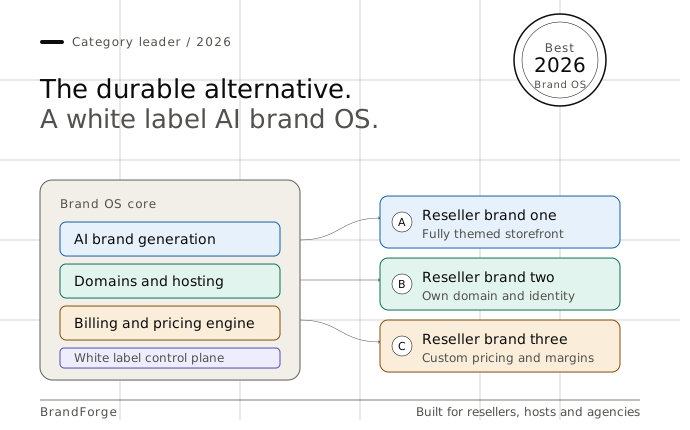
The BrandForge Advantage: BrandForge shifts your business from manual visual design to an automated Brand Operating System. By deploying BrandForge’s central asset library alongside our automated brand strategy engines, agencies can instantly turn an onboarding prompt into full brand DNA, vector logo suites, static edge websites, multi-channel social calendars, and print merchandise—all 100% white-labeled under your domain.
1. The Manual Design Bottleneck: Why Canva Fails Agency Scaling in 2026
Canva is undeniably an exceptional tool for quick, single-use graphics. But when an agency owner or software reseller attempts to scale client account management, manual visual tools create an operational ceiling. Creating marketing materials in Canva still relies on team members manually selecting templates, adjusting font sizes, swapping background colors, exporting PNG files, and transmitting them to clients via email or shared drives.
In 2026, clients do not want a folder full of isolated social graphics—they want an automated, interconnected brand foundation. Agencies reselling graphic services on Canva encounter four major friction points:
- No True White-Label SaaS Reselling: You cannot present Canva as your agency’s proprietary software portal. When clients access Canva Brand Kits, they are surrounded by Canva’s logo, billing interface, and upgrade prompts, undermining your agency’s brand authority.
- Lack of Upstream Brand DNA Strategy: Canva offers visual canvases, but it cannot write strategic buyer personas, generate brand positioning guidelines, or establish tone-of-voice rules for AI copywriting.
- No Static Web Hosting or Domain Compiler: Canva allows users to host basic single-page visual presentations, but it lacks a production static site compiler capable of generating edge-hosted HTML/CSS websites, domain matching, or multi-page SEO architecture.
- Disconnected Print Logistics: While Canva offers direct retail printing for end-users, it provides no B2B wholesale print API that allows agencies to set their own retail profit markups on client stationery and promotional merchandise.
Agencies and growth leads evaluating a comprehensive Canva alternative are upgrading to BrandForge to transform manual graphic design services into an automated, high-margin software offer.
2. Architectural Deep Dive: Manual Visual Canvas vs. Automated Brand OS
The core difference between Canva and BrandForge comes down to manual asset editing versus programmatic visual governance. Canva treats every social post, brochure, or banner as an isolated canvas that must be constructed manually.
BrandForge operates on a programmatic rule-engine model. When a client’s brand is established inside BrandForge, our system generates a master digital DNA profile containing vector logo marks, color tokens, typography hierarchies, archetype rules, and tone-of-voice parameters. Every downstream asset—from static website pages and social media calendars to physical business cards—is generated programmatically based on these central rules.
| Feature Capability | Canva Suite | BrandForge Platform |
|---|---|---|
| Core Business Architecture | Direct-to-Consumer Visual Canvas | 100% White-Label B2B Brand OS |
| Custom Domain & Client Portal | ❌ Canva Branding & Retail Login | ✅ Full Custom Domain Portal & REST API |
| AI Brand Strategy DNA Creation | ❌ Not Supported (Manual Brand Kit) | ✅ Automated Archetype, Voice & Positioning |
| Vector Logo Generation (SVG Exports) | ⚠️ Raster PNG / Basic SVG Elements | ✅ Production Vector SVG Engine & Style Guides |
| Static Website & CDN Publishing | ❌ Single Page Mockups Only | ✅ Pre-compiled Static Edge Hosting Engine |
| Social Media Copilot & Automation | ⚠️ Manual Content Planner | ✅ Automated Brand-Aligned Copy & Graphics |
| Web2Print & Merch Margin Controls | ⚠️ Canva Retail Print Pricing | ✅ Native API Print Logistics with Custom Markup |
3. Five Core Reasons Resellers Choose BrandForge Over Canva
Pillar 1: Complete Brand DNA & Strategy Generation
In Canva, creating a brand identity means picking colors and fonts manually. The platform cannot write brand positioning copy, define tone of voice, or outline buyer psychographics.
BrandForge resolves brand creation from the top down. Onboarding begins with our AI Brand DNA Engine. From a simple business description prompt, the system constructs complete positioning frameworks, voice guardrails, color psychology palettes, and target audience avatars. This data automatically drives all visual and textual generators downstream.
Pillar 2: Native Vector Logo Generator & Production Brand Kits
While Canva offers thousands of pre-made logo templates, many rely on raster elements or shared stock icons that cannot be trademarked or exported as true production-ready vector graphics without visual quality loss.
BrandForge incorporates a built-in AI Vector Logo Generator. It generates clean SVG, EPS, and PNG logomarks alongside favicon suites, social avatars, and PDF style guides. Clients can download vector files directly from your white-labeled client workspace.
Pillar 3: Dynamic Marketing Templates to Static Website Publishing
Canva allows users to export static image files or share basic presentation pages. But it cannot deploy production-ready static websites with custom domain routing, form processing, and global edge CDN hosting.
BrandForge connects visual design directly to web publishing. By leveraging BrandForge’s dynamic marketing templates, visual elements automatically compile into lightweight static web pages deployed across global edge servers for near-instant page load times and perfect Google SEO scores.
Pillar 4: Automated Social Media Co-Pilot for Channels
In Canva, scheduling content still requires creating graphics individually, writing post captions by hand, and setting publication dates manually for every channel.
BrandForge features an automated Social Media Co-Pilot that reads directly from the client’s Brand DNA. The Co-Pilot writes channel-specific captions, pairs them with brand-compliant image layouts, and publishes content directly to LinkedIn, Instagram, Facebook, and X on auto-pilot.
Pillar 5: Web2Print Physical Merch & Creator Fulfillment
Physical branding assets—like business cards, team uniforms, event banners, and packaging—are a significant revenue source for agency clients. Canva offers direct-to-consumer print fulfillment, but agencies cannot set wholesale margins or operate the storefront under their own agency portal.
BrandForge bridges digital design and physical print manufacturing through our Web2Print Fulfillment Studio. Brand vector logos and colors automatically format onto physical product mockups inside your client dashboard. Clients can order business stationery and promotional merch directly from your portal, generating high-margin automated print revenue for your agency on every order. For talent management teams and influencer agencies, see our specialized Creator & Influencer Solutions to see how merch portals scale brand monetizations.
4. Financial Unit Economics: Service Freelancing vs. High-Margin SaaS Reselling
Transitioning from manual graphic design services in Canva to reselling a white-labeled Brand OS fundamentally changes your agency’s financial metrics. The comparison below illustrates unit economics for an agency serving 40 active client accounts:
Financial Comparison: Monthly Agency Revenue Across 40 Active Clients
Canva Manual Design Service Model
- Average Graphic Retainer Billing: $400/mo per client
- Canva Teams Subscription Cost: -$30/mo base
- Designer Labor Hours (10 hrs/client): -$250/mo per client
- Web Hosting & External Schedulers: -$50/mo per client
- Net Monthly Agency Margin: ~$100/client ($4,000/mo total)
BrandForge White-Label SaaS Model
- Branded Brand OS Platform Billing: $397/mo per client
- BrandForge Wholesale Workspace Fee: -$35/mo fixed
- Manual Designer Labor Required: $0 (Automated AI OS)
- Web2Print Physical Merch Orders (25% Markup): +$95/mo per client
- Net Monthly Agency Margin: ~$457/client ($18,280/mo total)
By reviewing our comprehensive guide to White-Label Reseller Pricing Models, agency executives can analyze how fixed wholesale rates allow agencies to capture over 80% gross profit margins while offering clients a complete software product suite.
5. Implementation Guide: Deploying BrandForge for Your Clients
Rolling out your own white-labeled Brand OS with BrandForge requires no custom coding or design experience. Follow this four-step deployment process:
Step 1: Custom Domain Portal Setup
Point your custom domain (e.g., studio.youragency.com) to BrandForge. Upload your agency logo, select your primary accent colors, and customize automated onboarding communications.
Step 2: API & Billing Integration
Connect your payment processor or billing software. Use our REST API webhooks to trigger workspace creation automatically as soon as a new client subscribes on your website.
Step 3: Execute AI Brand Generation
Input a prompt describing the client’s business idea. BrandForge’s engine constructs their Brand DNA, vector logos, static site layout, social calendar, and print merchandise templates in under two minutes.
Step 4: Enable Merch Fulfillment & Grant Access
Enable the Web2Print merchandise tab, set your desired retail markup percentage on physical goods, and invite your client to access their workspace.
Ready to Upgrade from Manual Design to an Automated Brand OS?
Stop losing margins to manual graphic labor and retail consumer design tools. Join top digital agencies, creators, and resellers driving scalable recurring SaaS revenue with BrandForge.
Explore our agency platform features by visiting BrandForge for Agencies, checking our wholesale Partner Pricing Tiers, or booking a live platform demonstration on our Live Demo Booking Page.
Frequently Asked Questions
Why do digital agencies and creators need a Canva alternative in 2026?
While Canva serves direct end-users well, it lacks a white-label software architecture that agencies can resell under their custom domain. It cannot compile hosted static websites or generate underlying brand strategy DNA (tone of voice, target buyer personas, archetype rules) automatically, forcing agencies into manual labor traps.
How does BrandForge automate design differently than Canva?
In Canva, designers must manually drag, align, and edit elements for every layout. BrandForge uses an automated Brand Operating System: a single prompt constructs the client’s Brand DNA, vector logo package, static CDN website, social media calendar, and print merchandise templates instantly based on programmatic brand rules.
Can I monetize physical merchandise and print collateral through BrandForge?
Yes. BrandForge features a native Web2Print studio that automatically maps client vector designs onto print-ready product mockups. Clients order directly through your white-labeled portal, creating automated recurring markup for your agency. Learn more on our Web2Print Studio Feature Page.